/
Platform
/
Core
/
Data model

A portfolio is more than assets. Customers, contracts, tariffs, telemetry, flexibility, and markets all need to connect in the same operational structure.
The Fever data model creates that shared foundation, so every team can work from the same operational reality.
See assets, customers, contracts, tariffs, telemetry, and participation through one operational structure.
Connect services, contracts, participation, and customer relationships without maintaining parallel data models.
Build systems on a shared operational foundation instead of stitching together disconnected datasets.
Assets, sites, customers, contracts, tariffs, telemetry, and markets shouldn't live in separate versions of reality.
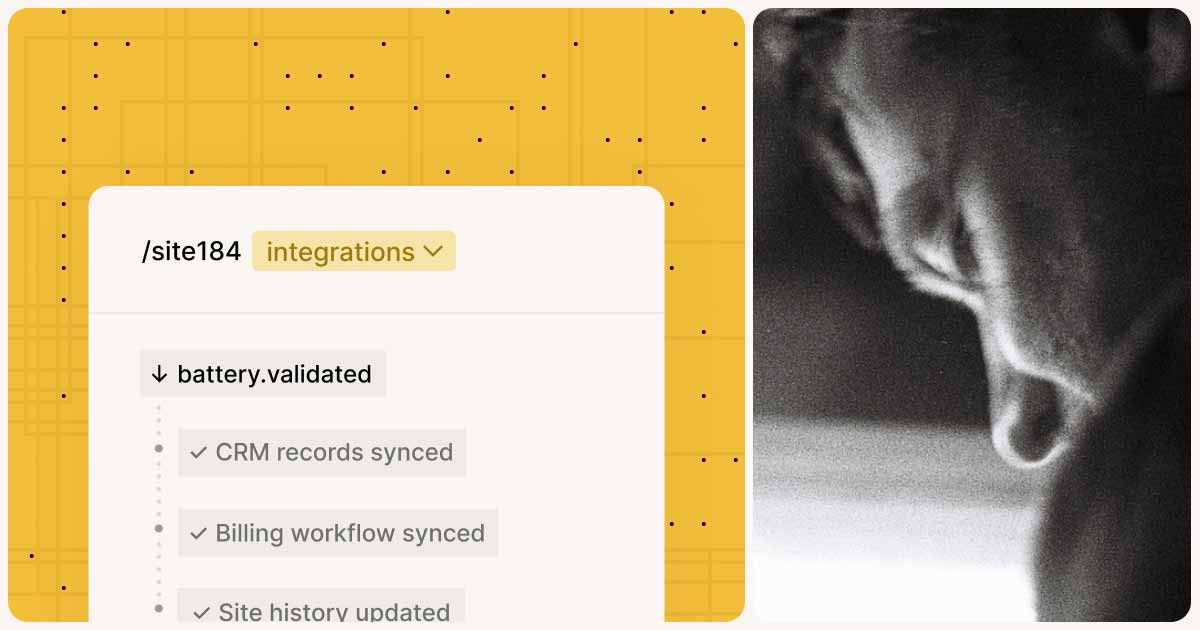
The data model captures how they relate: a battery belongs to a site, a site to a customer, a customer to a contract that defines participation, tariffs, and markets.
So forecasting, optimization, dispatch, billing, and support all work from the same context, and stay aligned as the portfolio grows.
A battery belongs to a site.
A site belongs to a customer.
A customer has a contract.
A contract defines participation, tariffs, and markets.
The data model keeps those relationships structured so forecasting, optimization, dispatch, billing, support, and reporting all operate from the same operational context.
At Fever, we’re building the technology needed to make distributed energy work at scale.
But performance alone does not create adoption.
Distributed energy has to work across operations, installers, support, commercial teams, and contributors.
That is why we design for how distributed energy actually works in practice. Across all the people, systems, and operational realities involved.
Your brand in front. Fever in the background.
ϟ .‿. Making distributed energy work.
©Fever Energy AB 2026. Stockholm, Europe.
All rights reserved. Privacy Policy